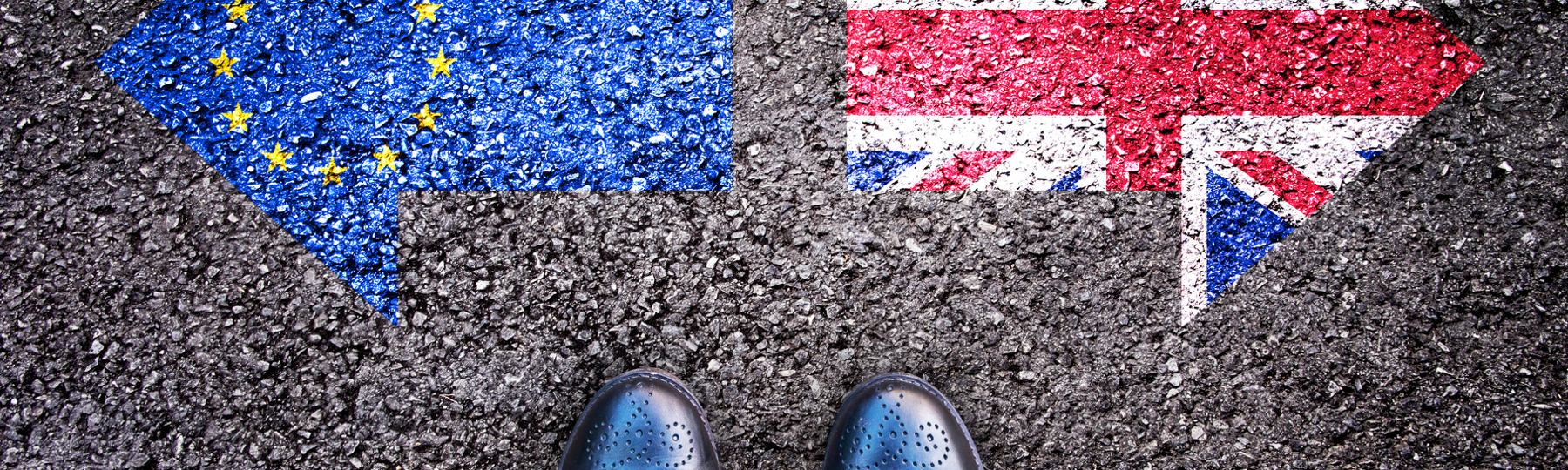
Brexit talks are about how abrupt the UK's final break will be
November 2020
The allegations went like this. The now-defunct UK arm of the US political consultancy Cambridge Analytica employed a Russian-born computer whizz to make an app-based survey. The app was placed on Facebook. When 300,000 people used the app, data was secretly gathered on 87 million, mainly US, users. The political consultancy bought more data and boasted of models and analysis that could “change audience behaviour”.[1] The Russian meddled in some way. Lo and behold, 1.8 million more UK voters opted to leave rather than stay in the EU in the 2016 referendum (to give a 52%-48% split), in defiance of the business, cultural, financial, political and technocratic elite.
That Cambridge Analytica, Facebook and Russia manipulated the UK’s industrial class and hijacked the referendum became a “dinner party topic” in the UK and inspired a TV drama and a Netflix documentary.[2] The Information Commissioner’s Office launched a probe. Over three years and armed with search warrants, the body that enforces data-protection laws in the UK examined 42 laptops and computers, 31 servers, 700,000 gigabytes of data, more than 300,000 documents, other material in paper form and still more data on cloud-storage devices.
And it found nothing. Cambridge Analytica and its UK arm were “not involved in the EU referendum campaign” beyond some initial enquiries, the commissioner’s office said. Their models were based on “off the shelf” analytical tools; that is to say, ho hum. Nor did evidence emerge the Russians interfered. The commissioner’s office, however, did impose the maximum penalty of 500,000 pounds on Facebook for the data breach and fined three other groups, including Leave.EU and Vote Leave, lesser amounts for breaches.[3]
That’s one Brexit controversy resolved. But others need addressing even though the UK left the bloc on January 31, an action that ended the first phase of the post-vote saga. That period was essentially a rerun of the referendum. Abetted by the EU, ‘Remainers’ sought to nullify the 2016 result while pushing for a ‘soft’ or token Brexit – where the UK effectively stayed under EU control within the common market. ‘Leavers’ pushed for a ‘hard’ Brexit, where the UK recouped its sovereignty and faced conditional access to the common market. They feigned calm about a ‘no-deal’ Brexit, a world of border controls, customs inspections, quotas and tariffs as the UK suddenly sat outside the common market (as countries such as Australia do), thus a likely economic blow epitomised by truck queues, shortages and rising prices.
The triumph of Prime Minister Boris Johnson’s Conservative party in the 2019 elections torpedoed the Remainer campaign. The UK left the EU and moved to the second part of the post-vote saga. That comprises an 11-month ‘transition’ phase during which the UK stays a member of the EU common market while Brussels and London settle on their future relationship. The options are a hard or no-deal Brexit.
Most of the details are agreed on how to manage EU-UK security and US$570 billion in trade but three disputes prevent an agreement. One is over fishing rights. The UK eyes restoring a distinct aquatic zone while the EU seeks to maintain a quota system across connecting waters. The second quarrel is over state aid to companies. The third is on how to resolve disputes. Other disputes of note that could flare include the UK territory of Gibraltar, data protection and the status of the City of London.
These issues are almost distractions compared with the problem of Ireland, an EU member. No one has solved how Northern Ireland adheres to UK laws while staying within the EU customs union to ensure a frictionless border and political calm across Ireland. London’s latest proposal, the Internal Markets Bill, violates the Northern Ireland Protocol attached to the Withdrawal Agreement of 2019 that demands an invisible border across Ireland. The conundrum for London is that a seamless EU-UK border across Ireland splits the UK as an economic entity because Brussels won’t countenance an ex-member staying in the common market. It’s possible the impasse over which laws and legal system apply to Northern Ireland could lead to border barriers and political violence that could push the province to reunite with the south.
The EU has warned it will take legal action against the UK if the Internal Markets Bill becomes law. The threat is mixed up with the ambit claims, bluffs, brinkmanship, broken deadlines, fruitless summits, theatrics and ultimatums between Brussels and London that are reviving a more-pressing existential threat to the UK. The Brexit saga is fuelling support for Scotland to depart the UK to rejoin the EU.
The year-end deadline could soon force decisions and a messy divorce is possible, though more out of miscalculation than desire. Some last-minute fudge that all hail as satisfactory and final is likely. But whatever the shape of any deal, Brexit will be an economic and political shock that will reverberate through the UK for years and could even break it.
Some caveats. Brexit is a secondary issue since the novel coronavirus escaped from China. Given the economic damage of the pandemic, a no-deal Brexit holds fewer concerns for many than before. Hard Brexit covers a range of outcomes that include a soft-enough exit that disappoints Leavers. Would Scotland really flee the UK and trigger the mayhem involved? Would Ireland unite after a century of partition? These were possibilities before the Brexit vote and could take years to occur.
Even so, the Irish problem appears unsolvable and Brexit has marked UK politics for the foreseeable future by making identity politics around Remainers versus Leavers the country’s biggest political tear. The latter manifests in issues from immigration and inequality to the environment and, ominously, in pushing component nations to leave a UK troubled by however visible or invisible is the border across Ireland.
Another chance to leave
‘Europe of the regions’ is the ideal that the EU is a gathering not of countries, but of local areas such as Flanders in Belgium and the Basque region on the French-Spanish border. The vision inspired the creation in 1994 of the European Committee for the Regions. To give voice to sub-national territories, the committee has 329 members staffing more than 200 diplomatic-like offices in Brussels.[4]
But the efforts of these people are largely token now. The ideal of a localised Europe essentially ended when Catalonia in 2017 sought EU membership to help break out of Spain. While Madrid could veto such a move, Barcelona’s quest for independence stirred alarm that Europe could balkanise if the continent’s numerous independence-seeking regions could exploit the construct of the EU as a series of treaties rather than being a federation to fulfil their ambitions.[5] (Treaties involve agreement among politicians whereas a federation implies constitutional structures that need voter support to change.)
Due to Brexit, however, Scotland could revive the hopes of regionalists across Europe that the EU is a path to independence. The ‘Take back control’ slogan that helped the Johnson-led Leavers clinch the Brexit referendum has been taken up in Scotland, which voted 62% to stay in the EU in 2016.
An Ipsos MORI poll for STV in October found that Brexit has stirred Scottish nationalism to the extent that a record 58% of Scots want to quit the UK and rejoin the EU, an increase from the 2014 referendum on independence when only 45% voted to leave the union.[6] The Ipsos poll found that 57% of Scots think Brexit is a convincing argument for leaving the UK, which Scotland joined in 1707 when its parliament dissolved itself by voting for the Kingdom of Scotland to join with the Kingdom of England to form Great Britain.
Brexit is boosting Scottish nationalism in three ways. One is that Brexit is seen as a free-market Tory-led campaign that will undermine the welfare state the Scots favour. To Scots, the shifting of powers from Brussels to London is skewing in Westminster’s favour the devolution of powers from the centre to the regions – where the ‘devolution’ policy of recent decades was designed to sate the independence stirrings in the nations that comprise the UK. The third reason behind the rise in Scottish nationalism is more sinister. Devolution is a sharing of responsibilities that gives rise to those timeless political tactics of claiming credit for successes and shifting the blame for failures. The Scottish National Party led by Nicola Sturgeon that dominates Scotland’s parliament (that was reconvened in 1999) has successfully blamed Westminster for Scotland’s covid-19 affliction and sub-par response.
Sturgeon, looking to Scottish elections next May to gain an outright majority that will be interpreted as a mandate for SNP’s core policy of independence, in October revived plans for a second referendum on Scotland’s place in the union. Any economic damage from an abrupt, especially a no-deal, Brexit would add to the political case for another chance to shatter the UK.
And then there is Northern Ireland. Westminster’s intelligence and security committee in October warned a visible border across Ireland “would increase the risk of political violence in border areas” because dissident republicans seeking to reunite Ireland are still formidable.
Yet no border means Northern Ireland would remain part of the EU’s customs union and that could fuel a breakup of the UK in another way. Northern Ireland would need to negotiate an internal border to interact with the rest of the UK. That hassle might lead to a view the province would be better served by reunifying with the south, and thus rejoin the EU that 56% of Northern Irish voted to stay with in 2016. Under the Good Friday agreement of 1998 that calmed three decades of violence in the province, London must call a referendum if polls show a majority of Northern Irish voters would vote for unification with the Republic of Ireland.[7] In Northern Ireland, Catholic numbers are nearing those of Protestants due to higher birth rates and enough Protestants might one day be prepared to join a more secular south to reclaim EU membership. Such is the pressure on Johnson as he negotiates over fishing rights, state aid and a resolution mechanism.
Mistrust
The ‘Cod Wars‘ is the name for the clashes between Iceland and the UK over fishing rights off Icelandic waters that stemmed from Reykjavik’s decision to annul a 1901 UK-Danish fishing-rights agreement after Iceland gained independence from Denmark in 1944. In the First Cod War from 1958 to 1961, Iceland declared a 12-mile (22-kilometre) exclusive zone and the navies of Iceland the UK confronted each other. Boats collided, shots were fired, and Iceland threatened to quit NATO. In the Second Cod War of 1972 to 1973, Reykjavik proclaimed a 50-mile exclusive zone. Iceland gunboats used ‘cutters’ to wreck UK and German nets, one shelled a UK trawler and vessels collided causing one electrocution. The Third Cod War of 1975 to 1976 began when Iceland announced a 200-mile exclusive zone. The ramming tally reached 55, nets were slashed and shots fired. Reykjavik cut diplomatic ties with London and toyed again with quitting NATO. Tensions subsided only when London caved into Icelandic demands and British fleets abandoned long-distance trawling.[8]
In between the second and third cod wars, UK fishing received an even bigger blow and one closer to home. In 1973, London gave up sovereignty over UK waters to join the forerunner of the EU. Many UK fishing communities felt betrayed and are now keen to escape the Common Fisheries Policy quota system that means other countries capture more than half the fish caught in former UK waters. Britain’s fishing industry is worth only 0.1% of UK GDP but the reclaiming of marine sovereignty and the fact that seaside communities in decline symbolise the underclass that voted for Brexit give the industry outsized political importance.[9] Complications include that about 75% of the UK’s fishing exports head to Europe and that fishing communities in EU neighbours, especially France, have hefty domestic political weight too.
The issue of state aid is just as difficult to resolve because it reverses standard trade agreements. In the usual talks on trade, two parties seek mutually beneficial outcomes by reducing barriers and costs to trade. With Brexit talks, however, it’s about settling on rules that sabotage free trade. The UK’s motivation is to gain tax and regulatory competitive advantages over the bloc. The EU’s goal is the opposite – it must show that an ex-member is worse off.
At a more esoteric level, the problem is mistrust, which was highlighted when the EU and some within Johnson’s party (including his predecessor Theresa May) accused Johnson of breaching pledges on Ireland. Johnson said in August there would be only be a UK internal customs border in the Irish Sea “over my dead body”.[10] The mistrust leads to the problem of how to enforce any agreement.
In Johnson’s jargon, a hard Brexit would be a ‘Canada’-style free-trade agreement with the EU. A no-deal Brexit would be an ‘Australian’-style arrangement where the UK largely operated under WTO rules, which would mean tariffs and quotas on key industries.
But even viewed like so, the minutiae of the EU’s latest ‘Canada’-style offer to the UK is complex and falls short of Canada’s arrangement. The EU has a goods surplus with the UK but a services deficit, which is why the bloc’s proposal is for scant tariffs on goods but impediments to services that could hurt the City of London’s efforts to maintain supremacy status in Europe. Canada under its arrangement can certify its exports comply with EU rules but the offer from Brussels denies the UK this right. The same goes for ‘cumulation of origin’ goods – a term to cover exports to the EU that comprise goods imported from third countries (such as UK cars that rely on Japanese components). The biggest difference of course is that Canada’s agreement has no Northern Ireland protocol that subjects a Canadian province to foreign laws enforced by a foreign legal system.[11]
Such complexities are why a no-deal Brexit remains a possible outcome of the vote of 2016 when enough UK voters, for some reason not linked to Cambridge Analytica, Facebook or Russia, defied the elite.
By Michael Collins, Investment Specialist
[1] See Bloomberg Quick Take. ‘How the Facebook-Cambridge Analytica saga unfolded.’ 21 March 2018. bloomberg.com/news/articles/2018-03-21/understanding-the-facebook-cambridge-analytica-story-quicktake?sref=ORbm2mFs
[2] Information Commissioner’s Office. ‘Blog: Elizabeth Denham on the conclusion of the ICO’s investigation into the use of personal data in political campaigning.’ 6 October 2020. ico.org.uk/about-the-ico/news-and-events/news-and-blogs/2020/10/blog-the-conclusion-of-the-ico-s-investigation-into-the-use-of-personal-data-in-political-campaigning/
[3] Information Commissioner’s Office. Letter to the chair of the Digital, Culture and Media and Sport Select Committee, House of Commons. ‘Re: ICO investigation into use of personal information and political influence.’ 2 October 2020. ico.org.uk/media/action-weve-taken/2618383/20201002_ico-o-ed-l-rtl-0181_to-julian-knight-mp.pdf
[4] European Committee for the Regions. cor.europa.eu/en/members/Pages/National-delegations.aspx
[5] See EU Observer. ‘Catalonia shows that ‘Europe of the Regions’ is dead.’ 24 January 2018. euobserver.com/news/140666
[6] STV. ‘Poll: Support for independence hits historic record high of 58%.’14 October 2020. news.stv.tv/politics/poll-support-for-independence-hits-historic-high-of-58?top
[7] See: POLITICO. ‘Ireland’s political dividend.’ 20 June 2018. politico.eu/article/united-ireland-after-brexit-reunification-vote/
[8] See UK government national archives. Cabinet papers. ‘The cod wars’. nationalarchives.gov.uk/cabinetpapers/themes/cod-wars.htm. See Wikipedia. ‘Cod wars.’ en.wikipedia.org/wiki/Cod_Wars#First_Cod_War
[9] See The House of Lords report. Select committee on regenerating seaside towns and communities. Report of session 2017-19. ‘The future of seaside towns.’ 4 April 2019. publications.parliament.uk/pa/ld201719/ldselect/ldseaside/320/320.pdf
[10] Bloomberg News. ‘Boris Johnson says Irish Sea border ‘over my dead body’’. 14 August 2020. bloomberg.com/news/articles/2020-08-13/johnson-says-irish-sea-border-over-my-dead-body-as-checks-loom?sref=ORbm2mFs
[11] Martin Howe QC. ‘Why Boris should reject this Brexit deal.’ 20 October 2020. The Spectator. spectator.com.au/2020/10/why-boris-should-reject-this-brexit-deal/
Important Information:
This material is not intended to constitute advertising or advice of any kind and you should not construe the contents of this material as legal, tax, investment or other advice. In making an investment decision, you should read and consider any relevant offer documentation applicable to any investment product or service and must rely on your own examination of the same and consider obtaining professional investment advice tailored to your specific circumstances before making any investment decision.
The investment program of the strategy or strategies presented herein ('Strategy') is speculative and may involve a high degree of risk. The Strategy is not intended as a complete investment program and is suitable only for sophisticated investors who can bear the risk of loss. The Strategy may lack diversification, which can increase the risk of loss to investors. The Strategy's performance may be volatile. Past performance is not necessarily indicative of future results and no person guarantees the future performance of the Strategy, the amount or timing of any return from it, that asset allocations will be met, that it will be able to implement its investment strategy or that its investment objectives will be achieved. Statements contained in this material that are not historical facts are based on current expectations, estimates, projections, opinions and beliefs and such statements involve known and unknown risks, uncertainties and other factors, and undue reliance should not be placed thereon. This material may contain ‘forward-looking statements’. Actual events or results or the actual performance of the Strategy or any financial product or service may differ materially from those reflected or contemplated in such forward-looking statements. The Strategy will have limited liquidity, no secondary market for interests in the Strategy is expected to develop and there are restrictions on an investor's ability to withdraw and transfer interests in the Strategy. The management fees, incentive fees and allocation and other expenses of the Strategy will reduce trading profits, if any, or increase losses.
No representation or warranty is made with respect to the correctness, accuracy, reasonableness or completeness of any of the information contained in this material. This information is subject to change at any time and no person has any responsibility to update any of the information provided in this material. This material may include data, research and other information from third party sources. No guarantee is made that such information is accurate, complete or timely and no warranty is given regarding results obtained from its use. The issuer of this material and its related entities and affiliates will not be responsible or liable for any losses, whether direct, indirect or consequential, including loss of profits, damages, costs, claims or expenses, relating to or arising from your use or reliance upon any part of the information contained in this material including trading losses, loss of opportunity or incidental or punitive damages.
This material and the information contained within it may not be reproduced, or disclosed, in whole or in part in any circumstances. , Further information regarding any benchmark referred to herein can be found at www.magellaninvestmentpartners.com/funds/benchmark-information/. Any third-party trademarks contained herein are the property of their respective owners and are used for information purposes and only to identify the company names or brands of their respective owners. (060126-#i1)
United Kingdom: This material has been prepared by Magellan Asset Management Limited (ABN 31 120 593 946 AFSL 304 301) doing business as Magellan Investment Partners and is distributed in the United Kingdom by Magellan Investment Partners (UK) Limited (FRN: 1037936), an appointed representative of Sentinel Regulatory Services Ltd (FRN: 1007093) which is authorised and regulated by the Financial Conduct Authority. This material does not constitute an offer or inducement to engage in an investment activity under the provisions of the Financial Services and Markets Act 2000 (FSMA). This material does not form part of any offer or invitation to purchase, sell or subscribe for, or any solicitation of any such offer to purchase, sell or subscribe for, any shares, units or other type of investment product or service. This material or any part of it, or the fact of its distribution, is for background purposes only. This material has not been approved by a person authorised under the FSMA and its distribution in the United Kingdom and is only being made to persons in circumstances that will not constitute a financial promotion for the purposes of section 21 of the FSMA as a result of an exemption contained in the Financial Services and Markets Act 2000 (Financial Promotion) Order 2005 (FPO) as set out below. This material is exempt from the restrictions in the FSMA as it is to be strictly communicated only to 'investment professionals' as defined in Article 19(5) of the FPO.
United States: This material has been prepared by Magellan Asset Management Limited (ABN 31 120 593 946 AFSL 304 301) doing business as Magellan Investment Partners (‘Magellan’) which is a registered investment adviser. The investment strategies described herein are offered in the United States by Magellan Investment Partners North America, Inc., a U.S.-registered investment adviser. Magellan and Magellan Investment Partners North America, Inc. are affiliated entities for purposes of the Investment Advisers Act of 1940. Registration as an investment adviser does not imply any level of skill or training. This material is not intended as an offer or solicitation for the purchase or sale of any securities, financial instrument or product or to provide financial services. It is not the intention of Magellan to create legal relations on the basis of information provided herein. Past performance does not guarantee future results. Where performance figures are shown net of fees charged to clients, the performance has been reduced by the amount of the highest fee charged to any client employing that particular strategy during the period under consideration. Actual fees may vary depending on, among other things, the applicable fee schedule and portfolio size. Fees are available upon request and also may be found in Part 2 of Magellan’s Form ADV.
Canada: This material is provided to you by Magellan Asset Management Limited (ABN 31 120 593 946 AFSL 304 301) doing business as Magellan Investment Partners (‘Magellan’). Magellan is not registered in any province in Canada. The head office of Magellan is in Sydney, Australia and all or substantially all of its assets are situated outside of Canada. Due to the foregoing, there may be difficulty enforcing legal rights against Magellan.
South Africa: This material is provided to you by Magellan Asset Management Limited (ABN 31 120 593 946 AFSL 304 301) doing business as Magellan Investment Partners, who in accordance with FAIS Notice 55 of 2023 issued by the Financial Sector Conduct Authority, Magellan Investment Partners is exempted from section 7(1) of the Financial Advisory and Intermediary Services Act, 2002 (Act No. 37 of 2002). This material is not an offer in terms of Chapter 4 of the Companies Act, 2008.
UAE: This material has been produced by Magellan Asset Management Limited (ABN 31 120 593 946 AFSL 304 301) doing business as Magellan Investment Partners. This material is not for distribution to any other person. This material, and the information contained herein, does not constitute, and is not intended to constitute, a public offer of securities in the United Arab Emirates (‘UAE’) and accordingly should not be construed as such. Any offer of securities or financial services is made only to a limited number of exempt Professional Investors in the UAE who fall under one of the following categories: federal or local governments, government institutions and agencies, or companies wholly owned by any of them. No securities or services have been approved by or licensed or registered with the UAE Central Bank, the Securities and Commodities Authority, the Dubai Financial Services Authority, the Financial Services Regulatory Authority or any other relevant licensing authorities or governmental agencies in the UAE (the ‘Authorities’). The Authorities assume no liability for any investment that the named addressee makes as a Professional Investor. This material is for the use of the named addressee only and should not be given or shown to any other person (other than employees, agents or consultants in connection with the addressee’s consideration thereof).
Japan: This material is prepared by Magellan Asset Management Limited (ABN 31 120 593 946 AFSL 304 301) doing business as Magellan Investment Partners. The content is for informational purposes only and directed at Qualified Institutional Investors and other professional investors as defined in the Financial Instruments and Exchange Act. No distribution of this material will be made in any jurisdiction where such distribution is not authorised or is unlawful. This material does not constitute, and may not be used for the purpose of, an offer or solicitation in any jurisdiction or in any circumstances in which such an offer or solicitation is unlawful or not authorized or in which the person making such offer or solicitation is not qualified to do so.
Other jurisdictions: This material is provided to you by Magellan Asset Management Limited (ABN 31 120 593 946 AFSL 304 301) doing business as Magellan Investment Partners. No distribution of this material will be made in any jurisdiction where such distribution is not authorised or is unlawful. This material does not constitute, and may not be used for the purpose of, an offer or solicitation in any jurisdiction or in any circumstances in which such an offer or solicitation is unlawful or not authorized or in which the person making such offer or solicitation is not qualified to do so.